Revisiting Atopic Dermatitis through the Lens of Homoeopathy: An Evidence-Informed Perspective
Abstract
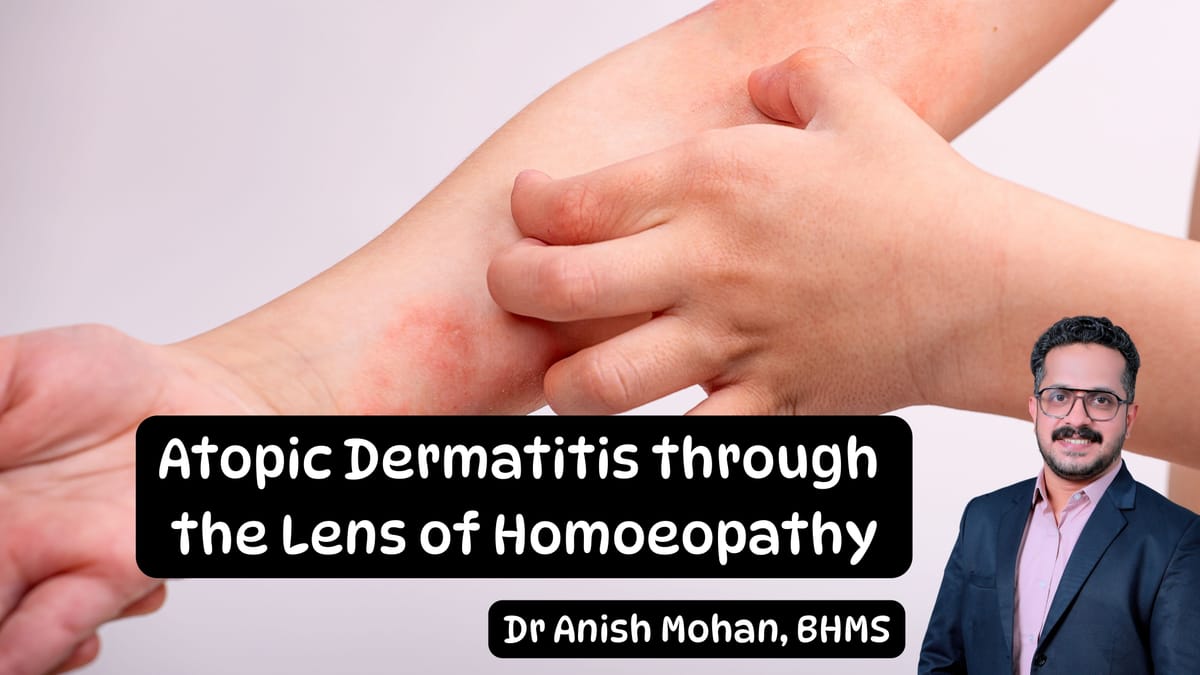
Atopic dermatitis (AD) is a chronic, relapsing inflammatory skin disorder characterized by intense pruritus, xerosis, and eczematous lesions. It is among the most common dermatological conditions globally, particularly affecting children, but it may persist into adulthood as well. Conventional medicine identifies AD as a multifactorial disease involving genetic predisposition, immune dysregulation, and environmental triggers.
Introduction
Atopic dermatitis (AD), also referred to as atopic eczema, is a chronic, relapsing, non-infectious inflammatory skin disease. It significantly affects the quality of life due to persistent itching, sleep disturbances, and psychological stress. The global prevalence ranges between 10–20% in children and 1–3% in adults.
Despite advances in dermatology, complete and sustained remission remains a challenge, prompting the need for integrative approaches such as Homoeopathy. I have been practicing in and around the northern part of Kerala, where a large number of people reside abroad, especially in GCC countries, Western Europe, the USA, Canada, and Australia. These immigrant populations of Indian origin show a higher incidence of atopic dermatitis compared to indigenous populations, although the exact reason remains unknown.
Etiopathogenesis
1. Genetic Factors
Mutations in the filaggrin gene impair epidermal barrier function, leading to increased transepidermal water loss and enhanced susceptibility to allergens and microbes.
2. Immunological Factors
An imbalance between Th1 and Th2 immune responses results in elevated IgE levels and eosinophilia. Cytokines such as IL-4, IL-13, and IL-31 play a key role in inflammation and pruritus.
3. Environmental and Psychogenic Triggers
Exposure to irritants, temperature changes, emotional stress, and dietary allergens may provoke or aggravate disease flare-ups.
4. Microbiome Imbalance
Colonization by Staphylococcus aureus contributes to skin inflammation and barrier dysfunction, especially during secondary infections.
Clinical Features
- Pruritus: Hallmark symptom; often severe and persistent
- Lesions: Erythematous, exudative, or lichenified plaques
- Distribution:
- Children – face, neck, flexural areas
- Adults – hands, eyelids, antecubital fossae
- Course: Chronic relapsing pattern with periods of remission and exacerbation
Evidence-Based Homoeopathic Treatment Protocol
Diagnosis and Investigations
Diagnosis is primarily clinical, based on criteria such as Hanifin and Rajka. Supporting investigations may include serum IgE estimation and patch testing in suspected allergen-related cases.
Drugs According to the Course of Disease
(Drugs are substances that alleviate symptoms)
- Fagopyrum 30 – Itching with dryness
- Croton tiglium 30 – Intense itching with slight discharge
- Oleander Q / 30 – Improves circulation and promotes healthy skin
- Copaiva 30 – Chronic itching
- Anthrakokali 6C – When other drugs fail to produce results
Medicines for the Disease as a Whole
(Medicines act on the disease constitutionally)
- Caladium 30 / 200 – Alternation of dermatitis and asthma
- Dulcamara 1M – Aggravation in cold weather
- Arsenicum iodatum 4X – Dry and wet lesions
- Acid Nitricum 1M / 10M – Covers a wide spectrum of AD symptoms
- Mercurius solubilis 10M – With secondary infections
Remedies to Prevent Complications / Recurrence
- Medorrhinum 10M
- Tuberculinum 10M
Potency, Dose & Repetition
- Drugs: Preferably lower potencies, repeated frequently depending on disease intensity
- Medicines: Medium potencies, repeated less frequently
- Remedies: High-potency antimiasmatic remedies, repeated infrequently
Logical Philosophical Guideline
Atopic dermatitis is considered a trimiasmatic disease, where miasms exist in combination:
- Psora: Underlying hypersensitivity and chronic itching
- Sycosis: Thickened, lichenified, recurrent lesions
- Syphilis: Ulceration and excoriation
End Point of Treatment
- No recurrence even after repeated allergen exposure
- No need for medicine or placebo
- Patient remains symptom-free after crossing all seasons of a year without medication
Closing Note
Although atopic dermatitis primarily affects the skin, it significantly compromises quality of life. With the rising prevalence of AD, Homoeopathy and Homoeopaths have a vital role to play. Effective medicines combined with minimal lifestyle modifications can ensure long-term relief and improved well-being.
Dare to be wise!!
Dr. Anish Mohan
Chief Consultant
Homoeocare Multispeciality Clinic, Cherpulassery
Palakkad, Kerala – 679503
📞 Mob: 9496361539